
International Female Ride Day (IFRD), a global event celebrating women in motorcycling, recently held a special ride in collaboration with Can-Am. According to motorcycle.com, the event brought together women riders from across the United States to experience Can-Am's three-wheeled motorcycles and promote the spirit of female empowerment on the open road.
The event, which took place around the official IFRD date of May 2nd, was attended by Vicki Gray, the founder of IFRD. Gray's message, "Just Ride," encourages women worldwide to embrace motorcycling and increase their visibility in the riding community. Her presence added significance to the event, reinforcing the movement's core values.
The ride began at Ponte Winery in Temecula, California, where participants familiarized themselves with the Can-Am three-wheeled models. For many, including the motorcycle.com author Sylvia Houston, it was their first experience with these unique machines. The group then embarked on a route toward Aguanga, eventually stopping at Ricardo Breceda’s Art Gallery, known for its large metal sculptures.
Can-Am gifted each rider a piece of metal artwork from the gallery, providing a personal memento of the day. The author selected a butterfly sculpture to symbolize movement, independence, and growth, reflecting the themes of the event.
The ride continued onto the Palms to Pines Scenic Byway, a route known for its elevation changes and winding corners. The author noted that the Can-Am Canyon offered a different riding dynamic compared to traditional two-wheeled motorcycles. The steering feel was similar to that of a quad, requiring some adjustment. The Canyon's taller stance and higher center of gravity were noticeable in tighter turns.
The Can-Am Canyon features a braking system controlled entirely by the right foot, activating all three brakes simultaneously. It is clutchless and automatic, but includes paddle shifters for riders who prefer manual gear changes.
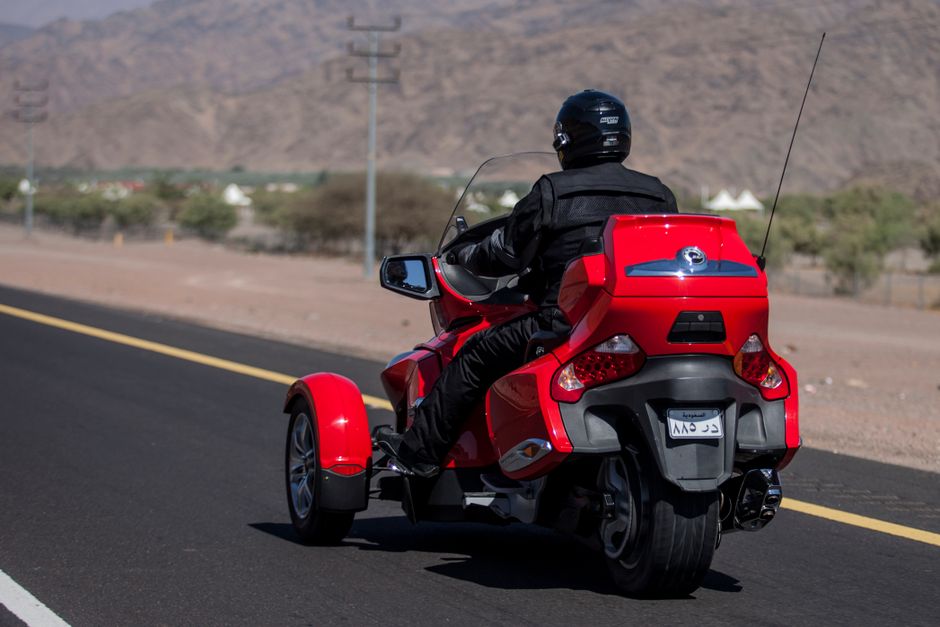


According to motorcycle.com, in California, three-wheeled vehicles are classified as motorcycles, but do not require a motorcycle endorsement to operate. While lane splitting is technically legal, the author advises against it due to the vehicle's width.
One of the key benefits of the Can-Am platform is its accessibility. It eliminates the need for balance and clutch control, making it easier for new riders to enter the world of motorcycling. The author spoke with a woman who had never ridden before but was drawn to the Can-Am because it removed the barriers of seat height and clutch management. She now rides regularly and serves as a brand ambassador, highlighting the platform's potential to broaden motorcycling's appeal.


